
449 results for “art”
We have found 449 results with the word you searched.
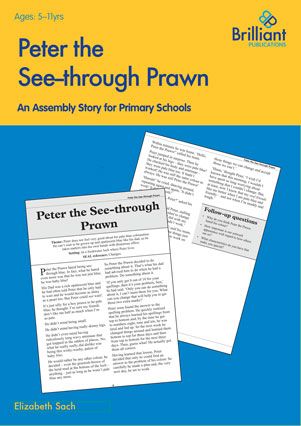
Peter the See-through Prawn
Nowadays children experience and endure feelings of self-consciousness (particularly about their appearance) extremely early on. Here, Peter the Prawn despairs being “wishy-washy, palest of baby blue” coloured and is desperate to change. He follows his father’s guidance and uses his keen problem–solving skills in an attempt to do so. Whilst his plan is ultimately unsuccessful, Peter grows to like his pale blue body. After discovering how to be brave, he realises that it doesn’t matter what he looks like; as long as he is kind, his real friends like him anyway. This assembly story about conscientiousness is taken from More Brilliant Assembly Stories, written by Elizabeth Sach and published by Brilliant Publications.
Add to basket Continue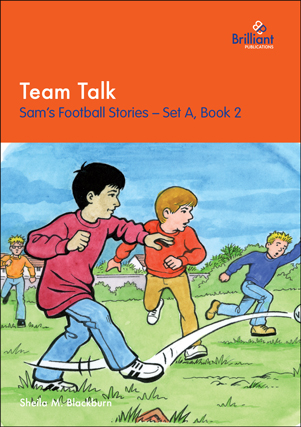
Team Talk – Sam’s Football Stories, Book 2 (Set A)
Sam's Football Stories are specially written to stimulate and motivate your slower learners and reluctant readers. Written by Sheila Blackburn, an experienced primary school teacher, the books will appeal particularly to reluctant boy readers. The six compelling stories in Set A, tell the story of Sam, a football crazy boy. In Team Talk, the second book in the series, join football mad Sam again. With the help of the local shopkeeper’s son, Eddie Ford, Sam and his football-mad friends now have someone to coach them. Scroll down to find out more and download ‘Try before you buy’ sample pages from the book.
Add to basket Continue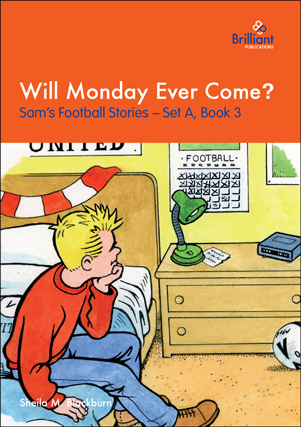
Will Monday Ever Come? – Sam’s Football Stories, Book 3 (Set A)
Sam's Football Stories are specially written to stimulate and motivate your slower learners and reluctant readers. Written by Sheila Blackburn, an experienced primary school teacher, the books will appeal particularly to reluctant boy readers. The six compelling stories in Set A, tell the story of Sam, a football crazy boy. Scroll down to find out more and download ‘Try before you buy’ sample pages from the book.
Add to basket Continue
Phonic Limerick Friends
Phonic Limerick Friends is an amusing set of teaching resources to teach phonics. They will interest and motivate all young children. The book contains 26 humorous limericks, one for each of the letters of the alphabet. Scroll down to find out more and download ‘Try before you buy’ sample pages from the book.
Add to basket Continue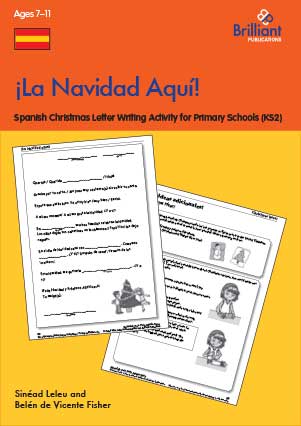
¡La Navidad aquí! – Spanish Pen Pals
¡La Navidad aquí! provides an easy way for Key Stage 2 pupils to practise writing in Spanish. Better still, the end result can be used to communicate in Spanish with other Spanish speakers! Even pupils just beginning to learn Spanish will be able to use the fill-in-the-gap letter to write about how they celebrate Christmas. More advanced pupils will be able to use the letter as a starting point for their own letter, using the additional vocabulary list for support. Whatever their ability, all children will have the satisfaction of being able to communicate effectively in Spanish. An English translation of the letter, key grammar points and extension ideas mean that it can even be given as homework! Helpful tips and ideas for fostering pen pal relationships between schools in different countries are included.
Add to basket Continue
Noël Chez Nous ! – French Pen Pals
Noël Chez Nous ! provides an easy way for Key Stage 2 pupils to practise writing in French. Better still, the end result can be used to communicate in French with other French speakers! Even pupils just beginning to learn French will be able to use the fill-in-the-gap letter to write about how they celebrate Christmas. More advanced pupils will be able to use the letter as a starting point for their own letter, using the additional vocabulary list for support. Whatever their ability, all children will have the satisfaction of being able to communicate effectively in French. An English translation of the letter, key grammar points and extension ideas mean that it can even be given as homework! Helpful tips and ideas for fostering pen pal relationships between schools in different countries are included.
Add to basket Continue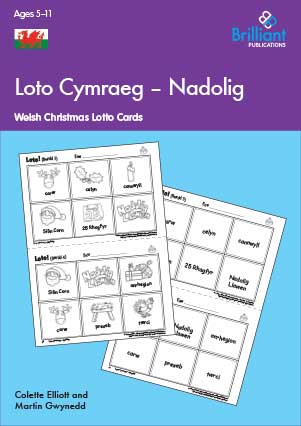
Loto Cymraeg – Nadolig
Games are the best way to learn Welsh vocabulary and never more so than at Christmas time! Use these reproducible loto boards to help teach and reinforce 12 key Welsh Christmas words. These attractive, easy-to-use reproducible loto boards provide a stimulating and meaningful way to develop reading, listening and speaking skills when teaching the topic of Nadolig (Christmas). Three versions of each board are provided - words only, words and pictures, and pictures only - allowing maximum flexibility, particularly in mixed ability classes. The unique call sheets enable you to follow the game closely and to select which team you want to win. Helpful ideas and tips for extending the use and complexity of the game are included.
Add to basket Continue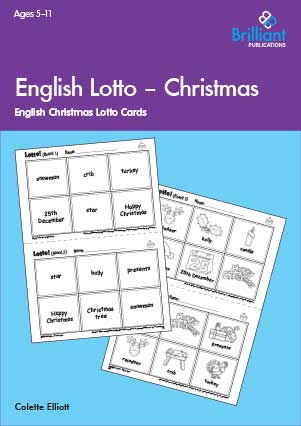
English Lotto – Christmas
Games are the best way to learn vocabulary and never more so than at Christmas time! Use these reproducible lotto boards to help teach and reinforce 12 key Christmas words in English. Vocabulary lists translate all the words used into French, Spanish, German, Italian, Portuguese, Welsh and Polish. These attractive, easy-to-use reproducible lotto boards provide a stimulating and meaningful way to develop reading, listening and speaking skills when teaching the topic of Christmas. Three versions of each board are provided - words only, words and pictures, and pictures only - allowing maximum flexibility, particularly in mixed ability classes. The unique call sheets enable you to follow the game closely and to select which team you want to win. Helpful ideas and tips for extending the use and complexity of the game are included.
Add to basket Continue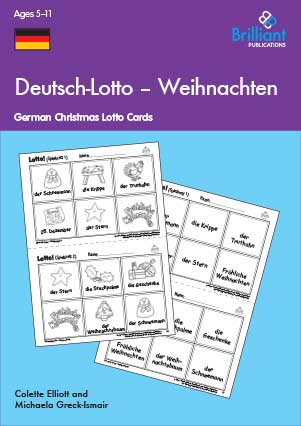
Deutsch-Lotto – Weihnachten
Games are the best way to learn German vocabulary and never more so than at Christmas time! Use these reproducible lotto boards to help teach and reinforce 12 key German Christmas words. These attractive, easy-to-use reproducible lotto boards provide a stimulating and meaningful way to develop reading, listening and speaking skills when teaching the topic of Weihnachten (Christmas). Three versions of each board are provided - words only, words and pictures, and pictures only - allowing maximum flexibility, particularly in mixed ability classes. The unique call sheets enable you to follow the game closely and to select which team you want to win. Helpful ideas and tips for extending the use and complexity of the game are included.
Add to basket Continue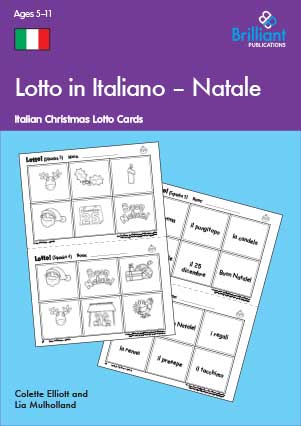
Lotto in Italiano – Natale
Games are the best way to learn Italian vocabulary and never more so than at Christmas time! Use these reproducible lotto boards to help teach and reinforce 12 key Italian Christmas words. These attractive, easy-to-use reproducible lotto boards provide a stimulating and meaningful way to develop reading, listening and speaking skills when teaching the topic of Natale (Christmas). Three versions of each board are provided - words only, words and pictures, and pictures only - allowing maximum flexibility, particularly in mixed ability classes. The unique call sheets enable you to follow the game closely and to select which team you want to win. Helpful ideas and tips for extending the use and complexity of the game are included.
Add to basket Continue